Chongqing Hot Pot
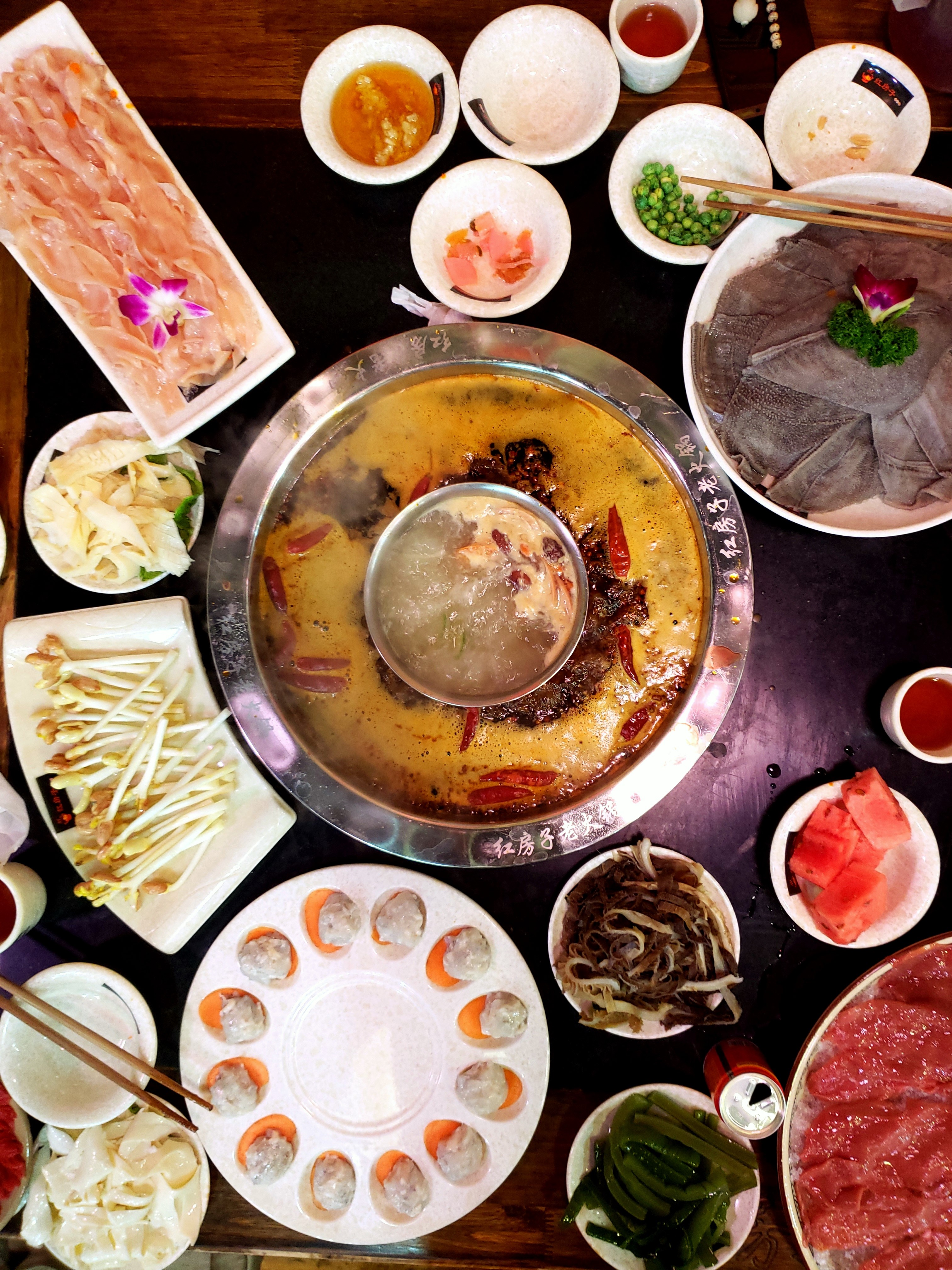
Chongqing Hot Pot is more than a meal; it's a ritual. The signature red broth — a furious boil of beef tallow, dried chilies, Sichuan peppercorns, and secret spices — arrives at your table in a divided pot. On one side, the inferno. On the other, a mild broth for the faint-hearted. Diners cook their own ingredients: thinly sliced beef, tripe (maodu), duck intestines, tofu, lotus root, and leafy greens. The dipping sauce is a personal creation — sesame oil, garlic, cilantro, and chopped chili. Unlike its cousin Sichuan hot pot, Chongqing hot pot uses beef tallow as the base fat, giving the broth a richer, heavier body that clings to every ingredient. Eating it is a full-sensory experience: the bubbling sound, the fragrant steam, the numbing tingle on your lips, and the sweat on your forehead. Locals say the best hot pot is found down narrow alleyways, where the queues start forming at 5 PM.
📖 History
Chongqing hot pot originated in the early 20th century among the boat trackers (纤夫) of the Yangtze River. These laborers would boil a pot of spicy broth with offcuts of beef and cheap vegetables to warm themselves during the cold, damp winters along the riverbanks. The method spread to the docks and eventually into the city, where it evolved into a beloved culinary institution. By the 1930s, hot pot restaurants were flourishing in Chongqing. During the Cultural Revolution it went underground, only to re-emerge in the 1980s stronger than ever. Today, Chongqing has over 30,000 hot pot restaurants, and the city's hot pot culture was recognized as an Intangible Cultural Heritage of Chongqing municipality in 2007.
Haidi Lao (海底捞) is the most famous chain, but locals prefer the gritty, no-frills spots: Qi Ma Hot Pot (奇马火锅) on Jiefangbei Road, or Zhou Shi San Jie (周氏三姐老火锅) at the end of a hutong in Yuzhong District. For the absolute classic experience, try Xiao Bin Lou (小滨楼) on Nanbin Road — it's been serving hot pot since the 1940s.