Platos imperdibles en Pekín
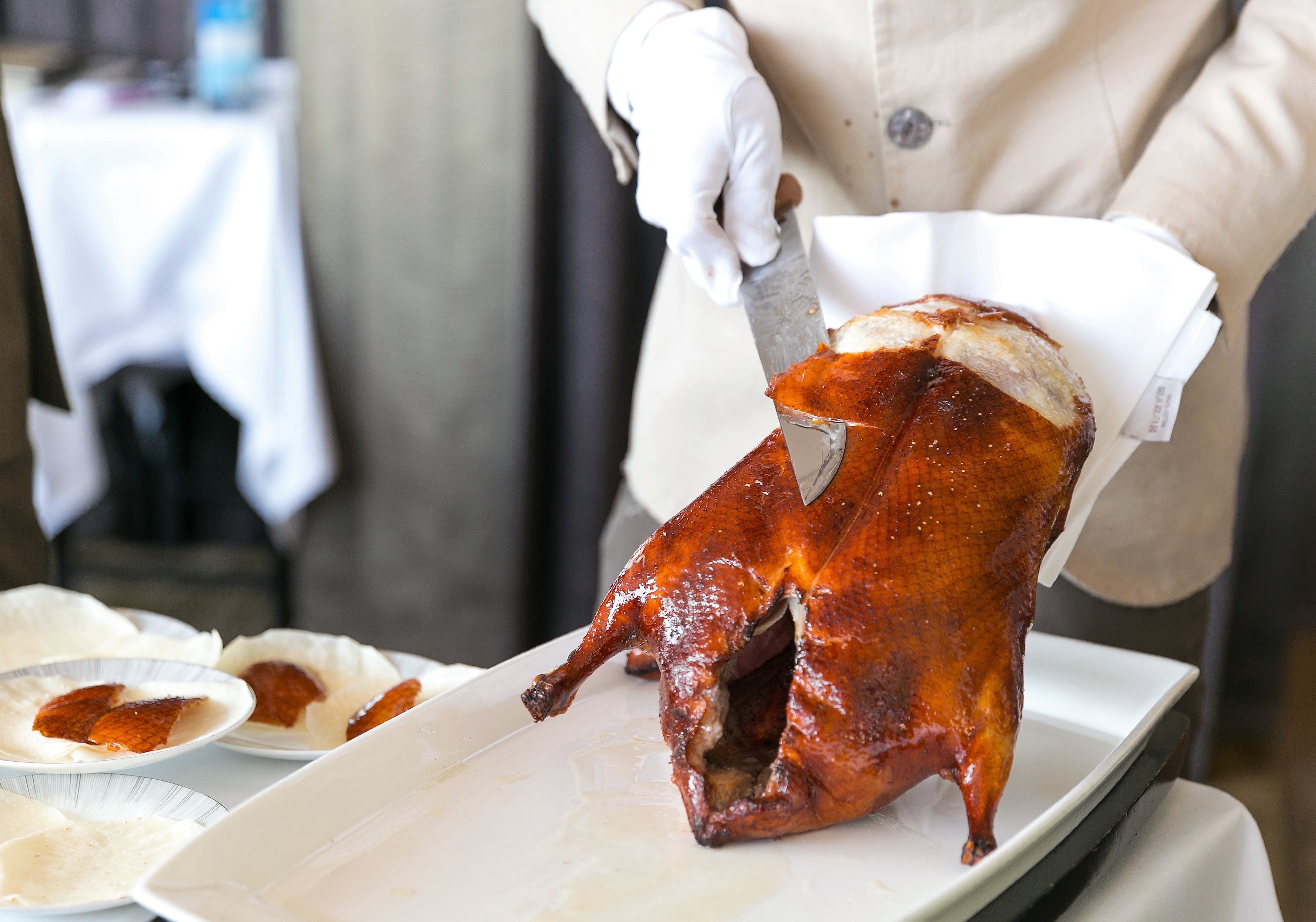
Pato laqueado de Pekín
El plato chino más famoso del mundo: pato crujiente asado y envuelto en panqueques.
Leer más →
Zha Jiang Mian
Tallarines gruesos con salsa de pasta de soja fermentada y cerdo—el alma de Pekín.
Leer más →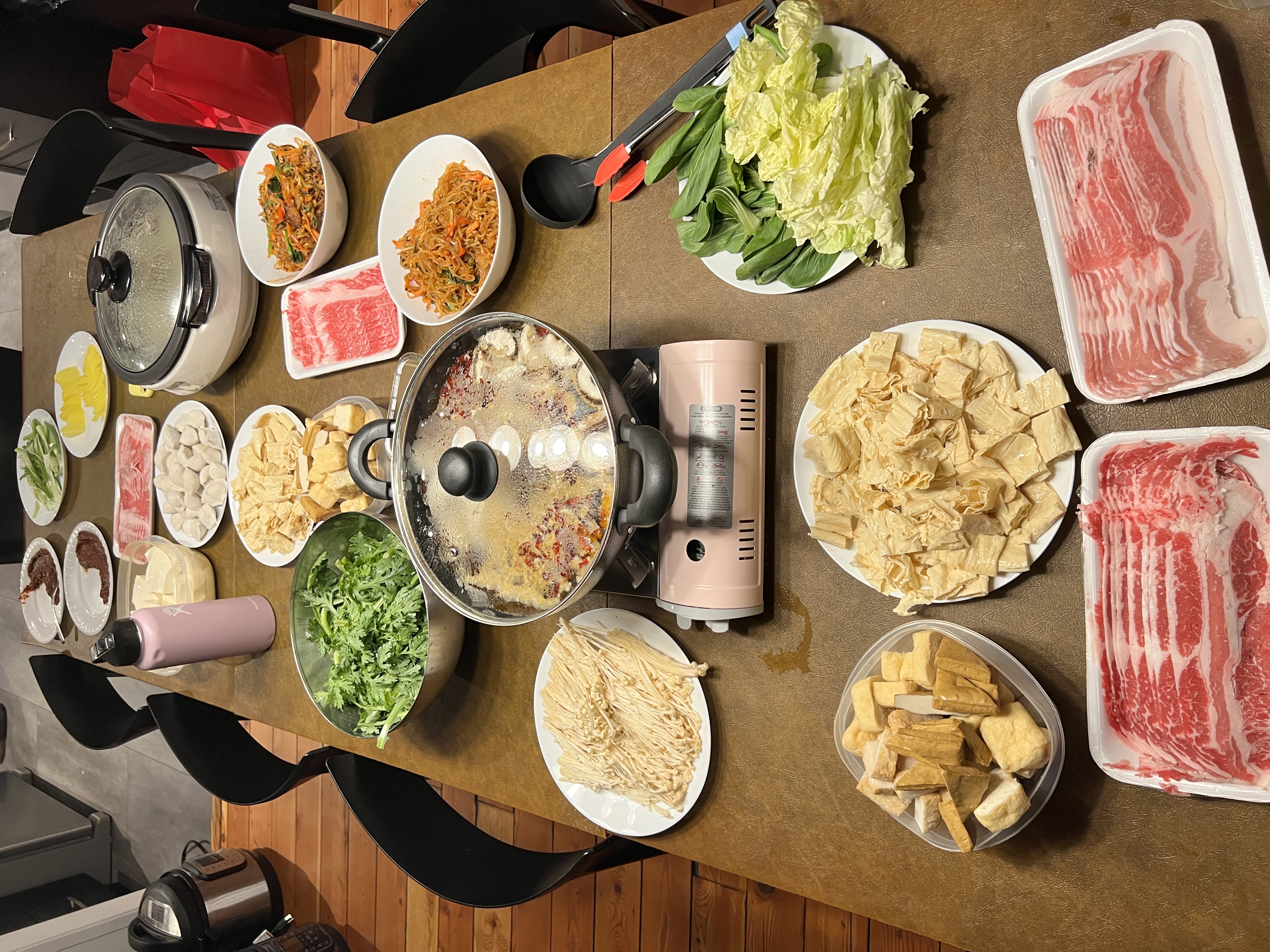
Shuan Yang Rou
Thinly sliced lamb swished in a bubbling copper hot pot and dipped in fragrant sesame sauce — Beijing's winter essential.
Leer más →
Jing Jiang Rou Si
Cerdo desmenuzado salteado en salsa de soja dulce, servido con envoltorios de tofu.
Leer más →
Lu Zhu Huo Shao
A hearty stew of pork offal, firm tofu, and flatbread in a soy-based broth — Beijing's most iconic street food.
Leer más →
Dou Zhi
A fermented mung bean drink with a pungent sour flavor — Beijing's most challenging (and beloved) traditional drink.
Leer más →
Jiao Quan
Crispy, ring-shaped deep-fried pastries that are the perfect companion to Beijing's fermented mung bean drink.
Leer más →
Bao Du
Quick-boiled lamb or beef tripe served with a fragrant sesame dipping sauce — a Beijing street food classic.
Leer más →
Chao Gan
A thick, garlicky stew of pork liver and intestines — Beijing's most controversial and beloved breakfast.
Leer más →
Wan Dou Huang
A delicate chilled dessert made from yellow peas — smooth, sweet, and melt-in-your-mouth.
Leer más →
Lü Da Gun
Soft glutinous rice rolls filled with sweet red bean paste and dusted with soybean flour — a playful Beijing snack.
Leer más →
Ai Wo Wo
Steamed glutinous rice balls filled with sweet fillings — a delicate imperial court snack turned Beijing street food.
Leer más →
Tang Er Duo
Deep-fried twisted pastries coated in golden sugar syrup — a sweet, sticky Beijing indulgence.
Leer más →
Men Ding Rou Bing
Thick, juicy beef meat pies shaped like the studs on Beijing's ancient city gates.
Leer más →
San Bu Zhan
A Zen-like dessert of egg yolk, sugar, and starch — it doesn't stick to the plate, the chopsticks, or your teeth.
Leer más →
Gong Ting Nai Lao
A smooth, subtly sweet fermented milk dessert — Beijing's imperial version of panna cotta.
Leer más →
Bing Tang Hu Lu
Candied hawthorn berries on a stick — Beijing's most iconic street snack, sweet, sour, and dazzlingly red.
Leer más →Mejores barrios gastronómicos
Wangfujing Snack Street
Wangfujing is Beijing's most famous shopping street, and its side alleys are packed with food stalls offering everything from Peking Duck to scorpions on a stick. Tourist-oriented but undeniably exciting.
Gulou (Drum Tower) Area
The area around the Drum Tower and Bell Tower is one of Beijing's most atmospheric neighborhoods, with hutong alleyways hiding excellent traditional restaurants and modern fusion spots.
Niu Jie (Ox Street) Muslim Quarter
Beijing's Muslim Quarter is home to the city's best lamb dishes. The area around Niujie Mosque has been a food destination for centuries, offering some of the most authentic Old Beijing flavors.
3天Pekín美食行程
Día 1: Imperial Beijing
Día 2: Hutong Food Adventure
Día 3: Old Beijing Deep Dive
Preguntas frecuentes
❓ Is Beijing food always spicy?
No! Unlike Sichuan food, traditional Beijing cuisine is rarely spicy. It emphasizes savory, salty, and sweet flavors — bean paste, soy sauce, sesame, and garlic are the base flavors.
❓ What's the most authentic Beijing breakfast?
The classic Old Beijing breakfast is Dou Zhi (fermented mung bean drink) with Jiao Quan (crispy fried rings) and pickled vegetables. But not everyone's palate can handle it — try Chao Gan (stewed liver) for a gentler introduction.
❓ Where can I find the best Peking Duck?
Quanjude (founded 1864) and Bianyifang (founded 1416) are the historic originals. Da Dong offers a modern interpretation with a thinner, crispier skin. All three are excellent.
❓ Is vegetarian food available in Beijing?
Yes. Beijing has a strong Buddhist vegetarian tradition. Many dishes in Beijing cuisine — Wan Dou Huang, Zha Jiang Mian (hold the meat), Jiao Quan, and most snacks — are naturally vegetarian or can be made so.
❓ What's the best time to visit Beijing for food?
Autumn (September-October) offers the best weather and seasonal ingredients like hairy crab. Winter (November-February) is the best time for Shuan Yang Rou and Bing Tang Hu Lu.